

the trained eye
noticing is a skill, here's how I practice.
There’s a version of noticing that often gets romanticized - the artist who floats through the world soft-eyed and dreamy, collecting beauty like it falls naturally into open hands. And while I love this movie-perfect idea of noticing inspiration, it’s not quite how it works for me. For me, the noticing and collecting I’ve come to trust in my work is more disciplined, more trained, more developed than that. More like a muscle that I’ve trained to spot and capture color and beauty again and again.
I’ve been thinking about this a lot this month, partly because March is about color for me as I go deeper into color studies and works for my next collection. Partly because I’ve been spending a lot of time revisiting old photos on my phone and starting to think of my camera roll as the eye for my work as an artist.
Not the eye you’re born with. The one you build. Every time you stop and notice something, you’re building your eye. You’re teaching yourself that this, right here, is worth your full attention. Do it enough and the world starts handing you things. Color relationships you couldn’t have invented. Pairings that would never come from sitting in front of a blank canvas trying to be original.
The more you train the eye, the more the world does the work for you.
So this month I’ve been stopping. On purpose. Three times this week I caught something and stood there with it for a minute, which is longer than it sounds.

One.
Austin is doing something I didn’t ask for and can’t look away from. The redbuds are blooming. That particular lavender-pink that takes over the roadsides and creek beds every March, usually right alongside the first acid-green push of new leaves. Lavender and lime. It’s not a combination I would reach for. It’s not in my palette, not in my instinct, not in anything I’d call my color language. And yet the trees don’t care about any of that. They just do it, confidently, every year, and every year it stops me. There’s something worth paying attention to in that. The combinations you wouldn’t invent are sometimes the ones the world is most insistent about showing you.
Two.
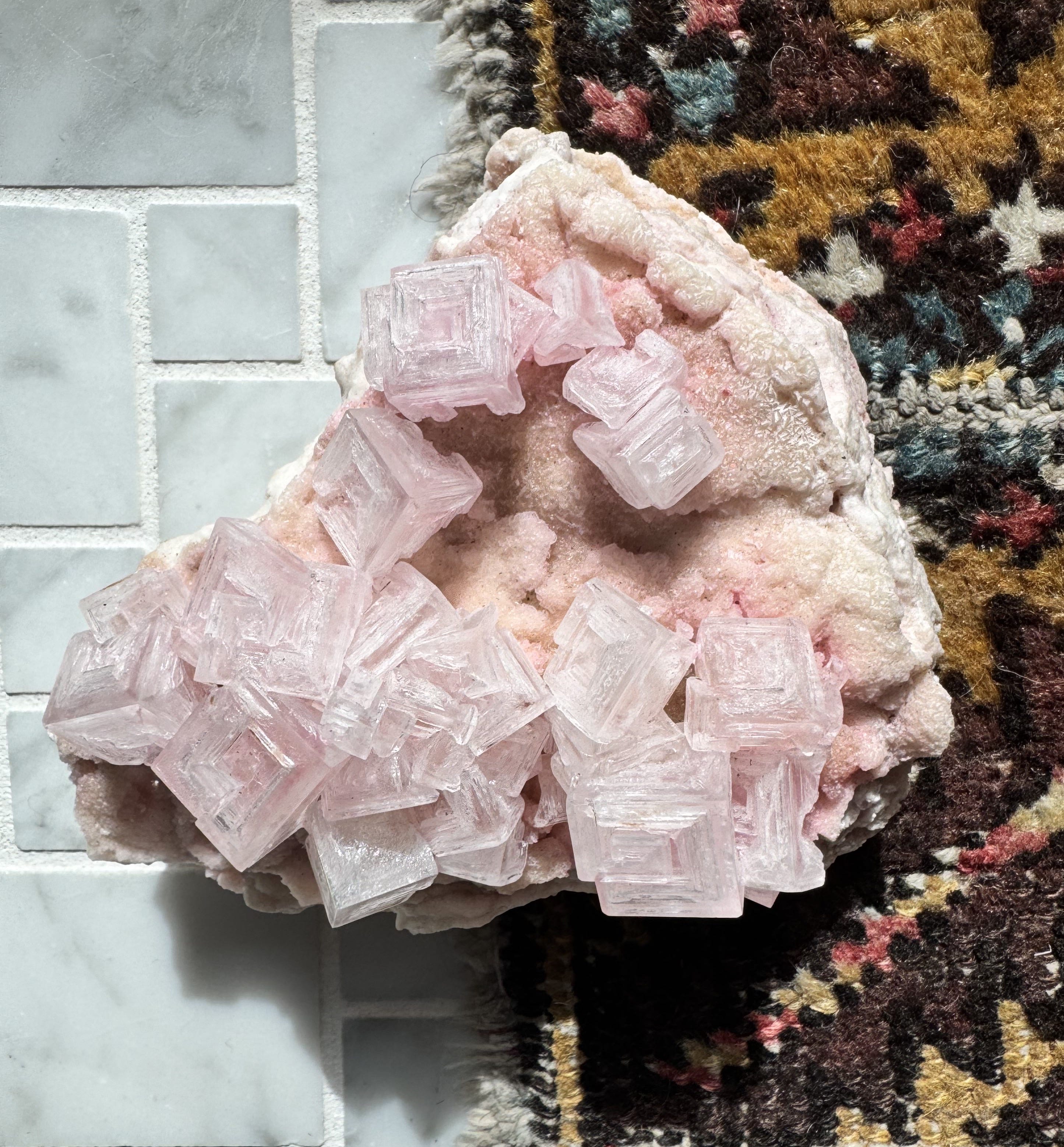
My mom went to the Tucson gem show and brought me back the most magical piece of pink calcite. I’ve been living with it on my studio shelf for the past week, just looking at it. The pink is chalky, not soft exactly, more like matte silk, the kind of color that seems lit from inside rather than from any external source. That luminosity is the problem I’m trying to solve. How do you mix a color that appears to generate its own light? Pigment doesn’t do that. And yet somehow you have to suggest that it does. I don’t have the answer yet. I’m still in the looking stage, which is usually where the most interesting work begins.
Three.
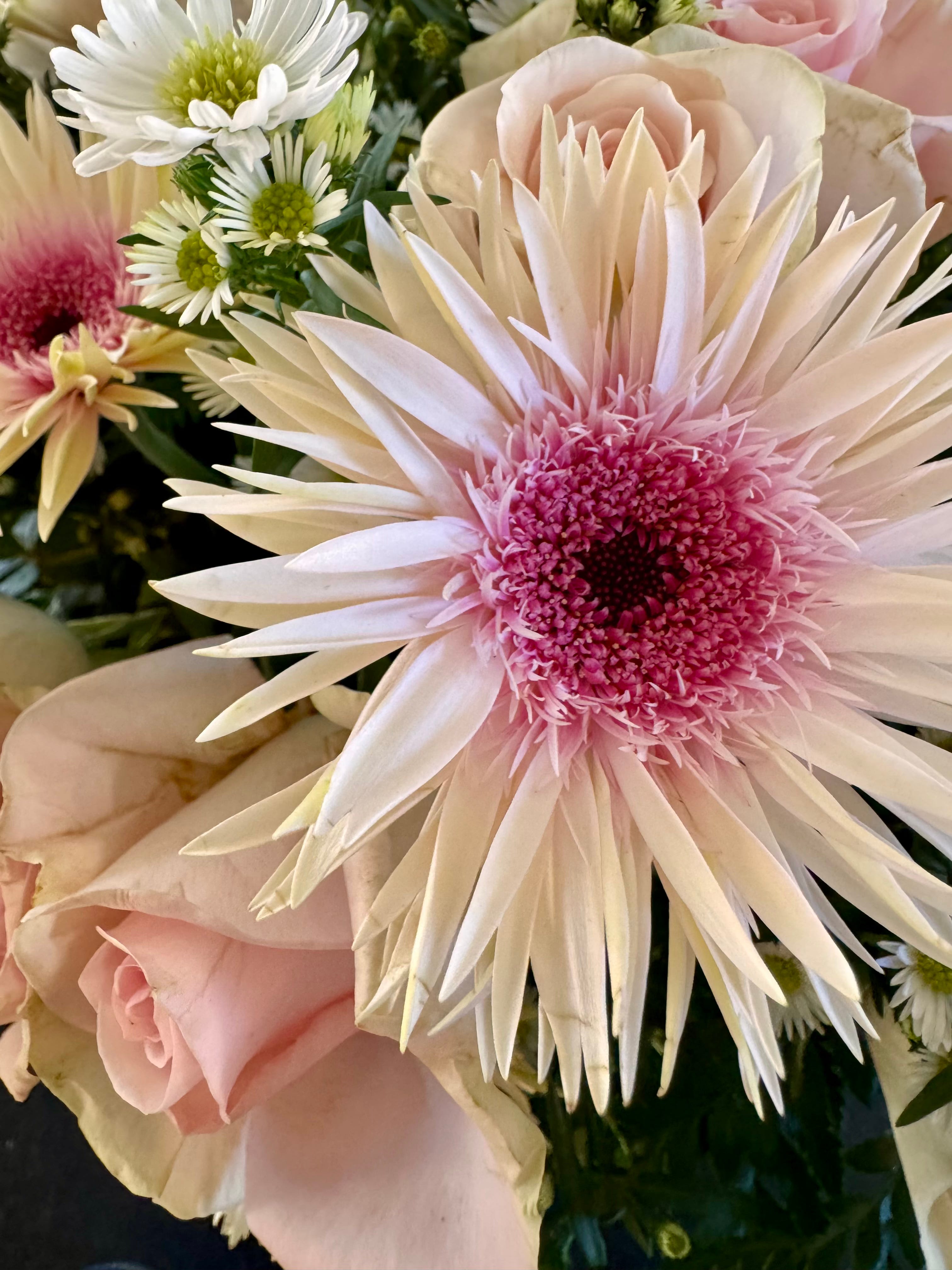
A spider chrysanthemum arrived in a grocery store bouquet this week. Those long, needle-thin petals radiating out like something between a firework and a compass rose, cream at the tips, deepening to the palest blush, then pulling into a center that goes full magenta, almost plum at its darkest point. One flower, moving through four distinct values of the same family. Cream to blush to rose to wine, in the span of a few centimeters. It’s the kind of gradient a painter would labor over and probably overwork. The flower just grew that way. I keep coming back to the center specifically — that concentrated burst of color, how it makes the pale petals around it look even more luminous by contrast. Dark makes light look lighter. I know this. But seeing it done this well is a reminder worth having.
None of these are paintings yet. I haven’t touched a brush to any of them.
But they already are taking up space in my mind, working their way into palettes and small studies, color mixing, ideas for later, in the way that the best source material always is : fully formed in the seeing, waiting only to be translated.
I wrote last week about a small room in Taos built for seven paintings and nothing else, about how color works on you whether you’re paying attention or not, how you can walk into a space and exhale before your brain registers why. The redbuds, the calcite, the chrysanthemum - having the tie to really absorb them and capture their beauty to study later, this is the other side of that. The active part. Because color only gets to do its work on you if you’ve done enough work on yourself to actually receive it. The trained eye isn’t some elevated artistic gift. It’s just the willingness to stop often enough that stopping becomes instinct.
This is what March is about for me. Not color as a subject but color as a practice. Not finding the perfect palette but staying awake to the ones that already exist, in the crystal on my shelf and the trees lining the road and the flower that arrived without fanfare and stopped me cold. The ordinary world is quietly, relentlessly generous with anyone willing to look.
The eye is a skill. And skills are built by showing up.
What did you stop for this week?
xx, Jill
Yellow is not usually a color I reach for, but the daffodils must be telling me otherwise. I’ve been using it in my work lately and now I see why! 💛👀
Wow that pink gem is GORGEOUS! 😯💖